

Some Stories Have the Shape for Screen

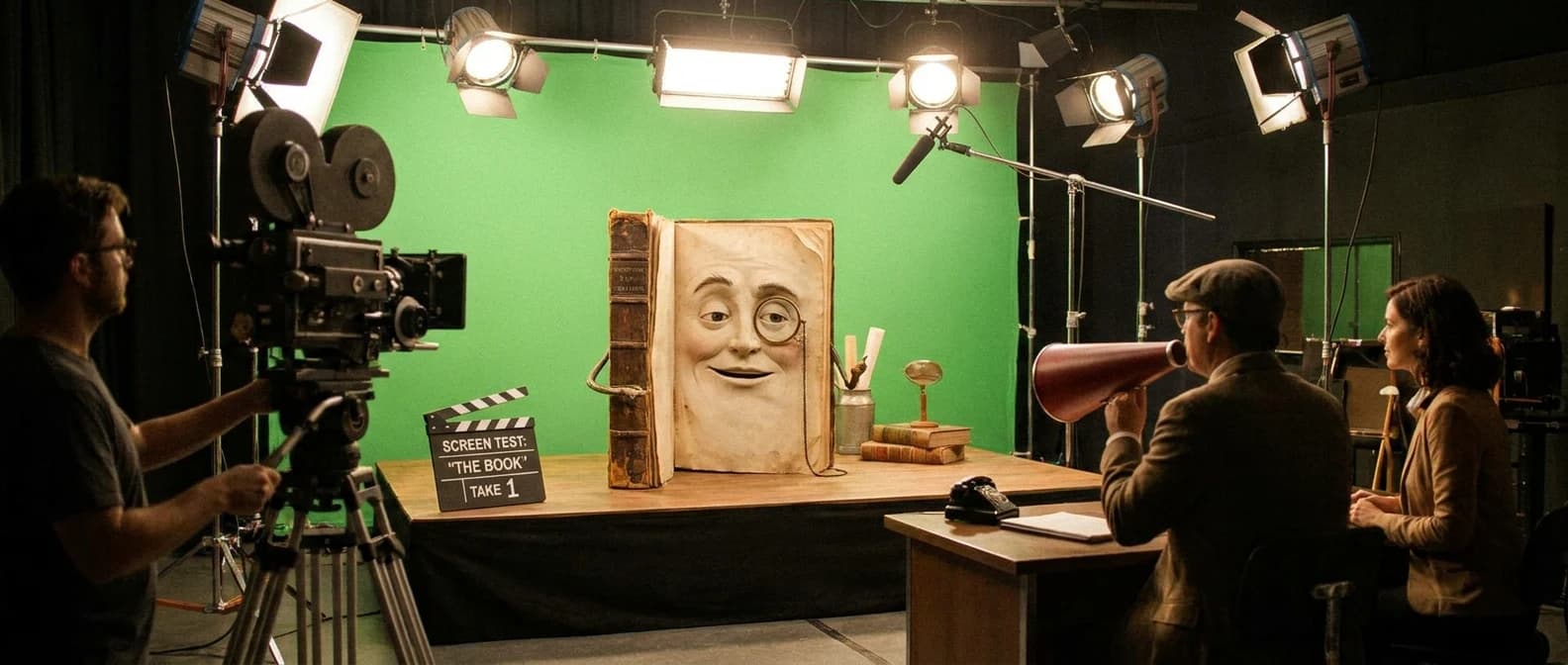
Maybe it comes from my background in film, but when I write, I tend to pressure-test a chapter by imagining it as a moving picture.
Can I see it?
Does something happen?
Does the chapter have its own shape?
Could it hold my attention if I encountered it apart from the rest of the book?
If the answer is no, I usually don’t move on. I go back and work on it again.
That doesn’t mean every chapter needs a car chase, a cliffhanger, or some enormous dramatic turn. Some of the strongest scenes are quiet. But I want to feel that something has shifted by the time the chapter ends. A character knows something they did not know before. A relationship has changed. A decision has been made. A question has become harder to ignore.
For me, imagining the scene on screen is one way of testing whether the chapter is carrying its own weight.
And sometimes, while doing that, you discover something else:
A scene may have enough shape to live beyond the page.
What does it mean for a story to have “shape for screen”?
Not every good piece of writing naturally translates into something visual.
Some writing derives its power from interior thought, language, memory, reflection, or the narrator’s voice. A passage can be extraordinary because of what happens inside a character’s mind rather than because of anything physically happening in the room.
Film works differently.
The audience needs something to experience through image, behavior, movement, sound, or change.
That does not mean a scene has to be loud or action-heavy. Two people sitting across from one another at a kitchen table can create a remarkably cinematic scene if something important is happening between them.
Someone wants an answer.
Someone is avoiding one.
Someone knows something the other person does not.
A conversation begins one way and ends with the relationship altered.
The important thing is that the scene has movement, even if nobody gets out of the chair.
What am I looking for when I pressure-test a chapter?
I am usually looking for a few basic things.
There needs to be a reason to enter the scene and a reason to stay with it. Someone generally wants something, even if that want is very small. There is some resistance. Something changes. And ideally, the chapter leaves us somewhere slightly different from where it began.
That change is often what gives a scene its shape.
A chapter might begin with a character believing one thing and end with them questioning it. Someone may arrive expecting a routine conversation and leave with a secret. A small disagreement may reveal a much larger fracture.
Those are the moments that tend to work well visually because the audience can follow the movement of the scene without needing everything explained.
A scene does not need “action” to be cinematic
When people hear the word cinematic, they sometimes imagine explosions, chases, elaborate locations, or enormous visual effects.
That is not what I mean.
Action can be emotional.
A person opens a letter and realizes everything they believed was wrong.
Someone quietly removes a wedding ring.
A character packs a suitcase while insisting they are not leaving.
A child refuses to get into the car.
Those are actions because they carry consequence.
Screen storytelling becomes interesting when behavior reveals something that dialogue or narration does not have to explain.
Why does the turn matter?
One of the easiest ways to test a scene is to ask:
What is different at the end?
If the honest answer is “nothing,” the scene may still contain beautiful writing, but it may not yet have a complete dramatic shape.
A useful scene usually turns somewhere.
A lie is exposed.
A decision is made.
A person changes sides.
A stranger becomes an ally.
An ordinary moment becomes threatening.
The turn does not need to be large. It simply gives the scene a destination.
That matters on the page, and it matters even more on screen.
What makes a scene visual?
Authors often put more visual information on the page than they realize.
A half-packed suitcase.
A family photograph turned face down.
A broken glass nobody cleans up.
A chair that remains empty.
A dog that refuses to enter a room.
These details are useful because they carry information without explanation.
On the page, an author can tell us what a character is thinking.
On screen, the audience often learns through what the character does, what they avoid, what they touch, and what they refuse to look at.
The strongest visual details usually aren’t decoration.
They are doing story work.
What about dialogue?
Dialogue can be wonderfully cinematic, but conversation alone does not make a strong scene.
The real question is what is happening underneath the words.
What does each person want?
What are they not saying?
Who has the advantage?
Does that advantage change?
A scene becomes interesting when the audience starts reading the behavior as closely as the dialogue.
The pause can matter as much as the sentence.
The glance can matter more than the answer.
Does genre determine whether a book works on screen?
Not nearly as much as people think.
Mysteries, thrillers, historical fiction, romance, westerns, and adventure stories may contain obvious visual possibilities, but genre is not the deciding factor.
Memoir can be intensely cinematic.
So can literary fiction.
So can nonfiction built around real people, events, conflict, and consequence.
Even speculative fiction does not have to depend on enormous effects. A fantasy world can be unfamiliar while the emotional stakes remain completely recognizable.
Two rivals forced to cooperate.
A parent hiding something from a child.
Someone discovering they have been betrayed.
The world may be unusual.
The human moment should still make sense.
Can a great chapter still be wrong for screen?
Absolutely.
Some of the best writing in a book may be the least suitable for visual treatment.
A chapter may depend heavily on interior monologue, backstory, exposition, or language that loses its power when made literal.
That does not make the chapter weak.
It means the page is doing something that the screen does differently.
This distinction matters because adaptation is not simply a question of choosing your favorite scene.
Sometimes the most beautifully written passage should remain exactly where it is.
One example from Perpetual Gloom
A chapter from Perpetual Gloom called “Walking the Cow” became a good example of what I mean.
When I looked at that chapter through the film lens, it had its own movement and personality. It could stand apart from the larger book without requiring the audience to know everything that came before it.
That made it a natural piece to explore visually.
We eventually created a cinematic version of the chapter, and a cut of Walking the Cow can now be seen on Riveter Studio’s YouTube channel.
What interested me about that process was not simply seeing my own writing animated.
It was seeing how one chapter could function as an introduction to a much larger work.
The viewer does not need to know all of Perpetual Gloom before entering that scene.
The scene gives them a way in.
That creates an opportunity for authors
If your book contains scenes that can stand on their own, they can become much more than excerpts.
They can become discovery tools.
Animating or cinematically producing a strong scene gives a potential reader a chance to experience part of the book before deciding whether to enter the larger story.
That is very different from a conventional book trailer.
A trailer generally tells the audience what the book is about.
A story scene lets them experience a piece of it.
That can be especially powerful because the promotion is no longer simply saying:
Here is my book.
It is saying:
Here is part of the world I created. Come inside for a few minutes.
Why might this be especially useful for backlist books?
Because the scene does not have to belong to a new release.
A good scene is still a good scene five years later.
An author may have a backlist full of material that was never considered visually because the original marketing campaign ended long ago.
A selected scene can reintroduce that work.
It can connect with an anniversary, season, current event, new book in a series, or simply give existing readers a new way to share something they already love.
The book may no longer be new.
The experience can be.
Which scene should an author choose?
Not necessarily the biggest one.
The climax may be the worst choice because it can spoil the story or require too much setup.
Often a smaller scene works better.
A discovery.
An argument.
An unexpected meeting.
A moment when the story changes direction.
A scene that reveals character quickly.
The strongest promotional scene often gives the audience enough to care without giving away too much.
A useful test is to hand the chapter to someone who knows nothing about the book.
Can they understand who matters?
Can they tell what someone wants?
Do they understand why the moment has weight?
Do they want to know what happens next?
If they do, you may have found something worth exploring.
Does the scene need to be rewritten for film?
Sometimes some adjustment is necessary, because books and film use different languages.
But the first question should not be:
How do we make this more like a movie?
It should be:
What is already here that can live visually?
That difference matters.
The writing should remain the source.
The job is to identify the action, emotion, rhythm, visual detail, and character already present and find a way to express those elements on screen.
Sometimes the most cinematic choice is restraint.
Why not tell the whole story?
Because you don’t need to.
A strong short-form piece can do something more useful than summarize the entire book.
It can create curiosity.
One relationship.
One conflict.
One decision.
One moment from a much larger story.
If the scene works, the audience reaches the end knowing enough to be interested but not enough to feel finished.
They are left with a question:
What happens next?
For an author trying to bring readers into a book, that may be exactly the right place to leave them.
So, does your story have the shape for screen?
You may already know.
Think about the chapters that you can see almost immediately when you reread them.
The room is clear in your mind.
The characters are doing something rather than simply explaining something.
There is tension.
Something changes.
The scene ends differently than it began.
And when it is over, the larger story still extends beyond it.
Not every chapter will do that.
It shouldn’t.
But when you find one that does, don’t think of it only as a passage buried inside a book.
It may also be a doorway into the whole thing.
Enjoyed this post? Get new ones the moment they publish.
Sign up for updates